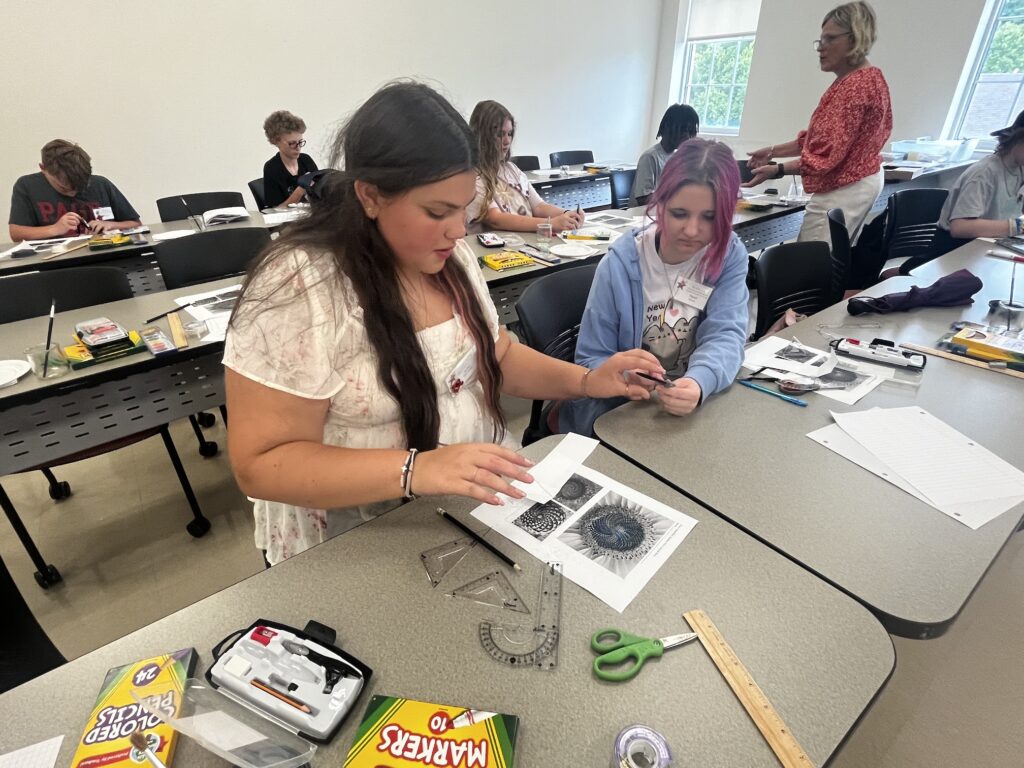
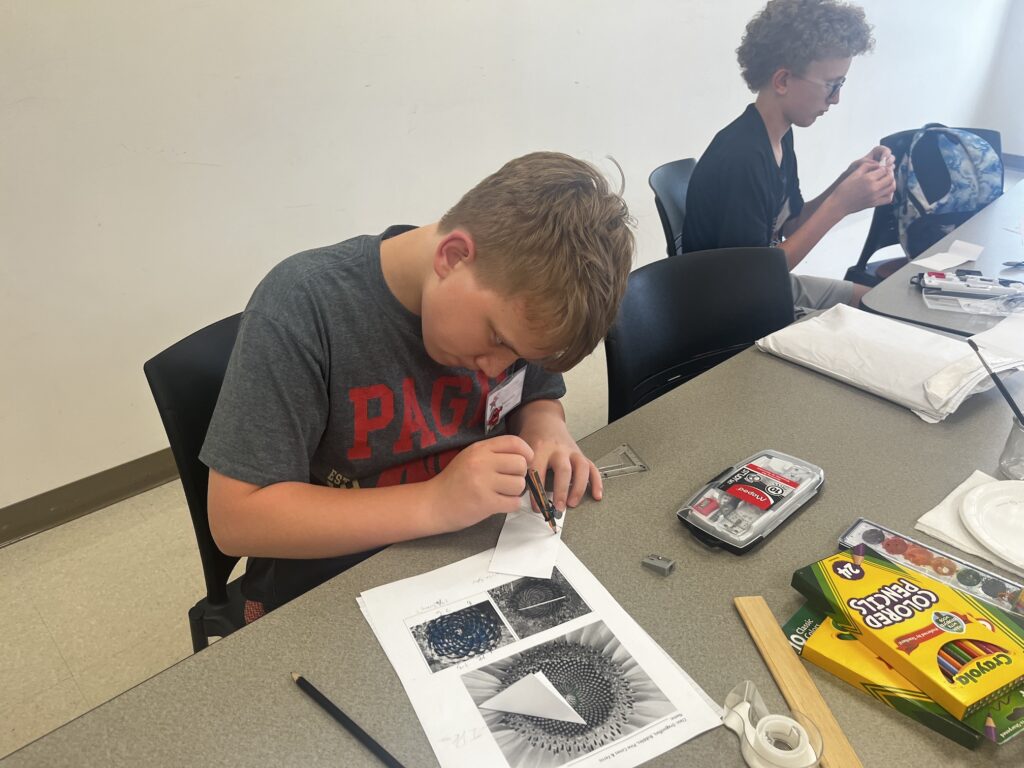
Walking into the Dragonflies, Bubbles, Pine Cones & Ferns class with Tonda Mullins was an incredibly fascinating scene. Students were assessing magnified images of a sunflower, a succulent plant, and a pine cone which were displayed on their desks and on the big screen. “How many spirals do you see in the pine cone?” Mullins asked. After counting, students started saying numbers – 32! 12! 16! “Oh, I don’t like those numbers, try again,” she said. One student counted 13. “Oh, I like 13!” Mullins smiled. “I counted 21,” another student shouted. “I like 21 too!” Mullins said.
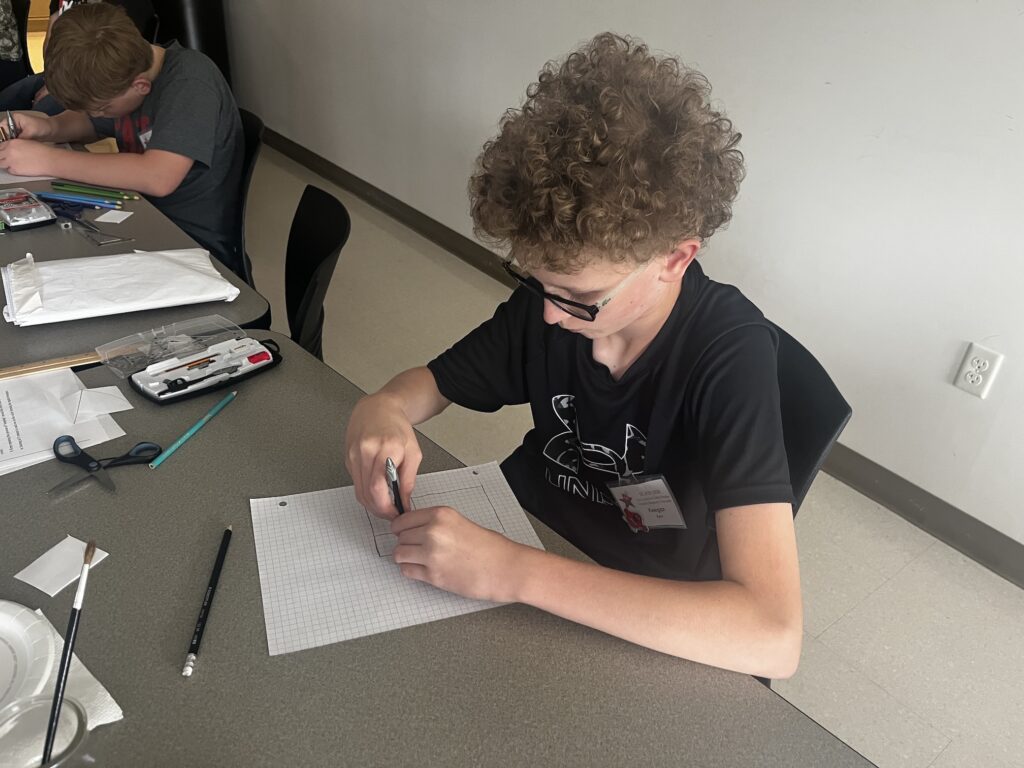
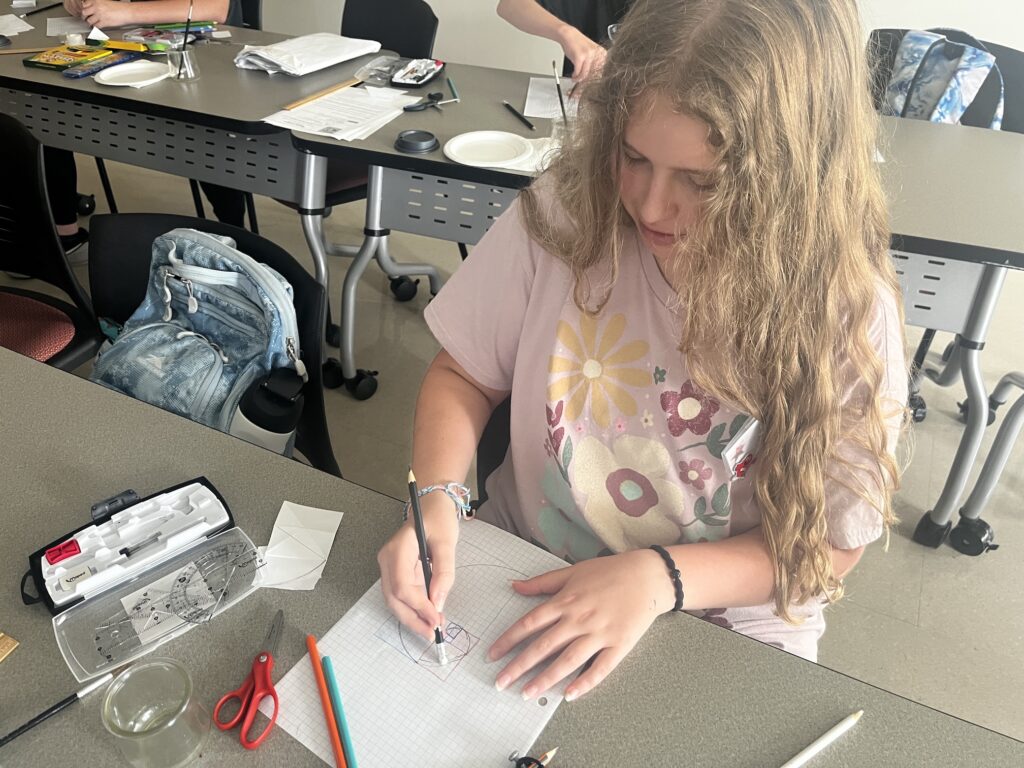
After a bit of observation and counting, Mullins explained the Fibonacci Sequence found in nature. The sequence, as she explained, is the sum of the two preceding ones (e.g. 1,1,2,3,5,8,13,21…) She also had them create a “golden rectangle” which is strongly related to the Fibonacci numbers.
This week the students have been learning about the connection of math to the natural world. Earlier in the week, they discussed Voronoi patterns with bubbles. Voronoi geometry is one of the most common patterns in the natural world such as the spots on a giraffe or the scales on a snake or the patterns in bubbles as students observed in class.
Being the end of the week, there were so many cool projects being worked on to keep their minds engaged. The end origami project was a bit challenging as several were creating a Japanese crane with guided directions on the screen. Campers did not let the complicated task keep them from a wonderful final result of a sleek, colorful crane.
One thing is certain; students will leave this class and look at all of nature through new, pattern-filled eyes!