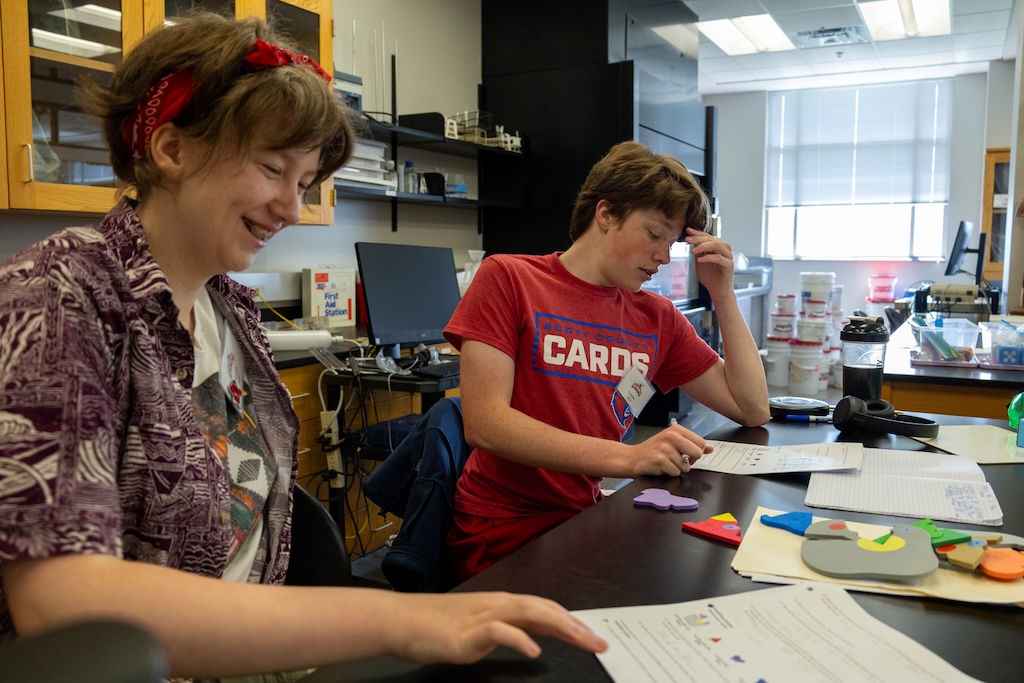
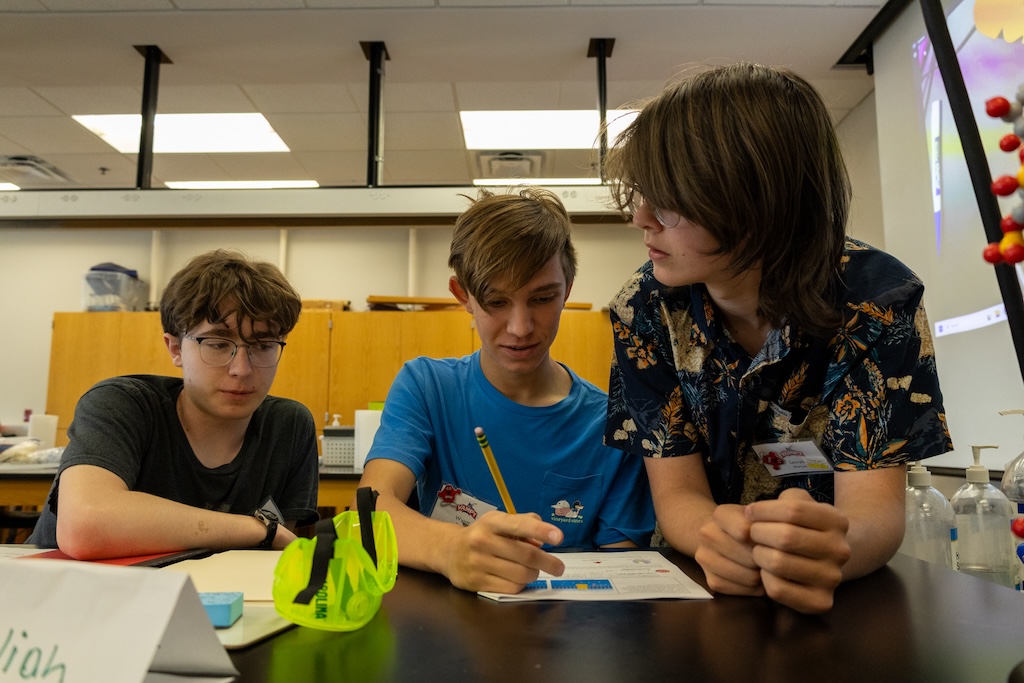
As VAMPY comes to an end, the DNA and Genetics students are working to master the structure, functions, and biological implications of the seemingly simple yet complex molecule, DNA. Specifically, so far they have learned about DNA structure, DNA replication, mitosis and meiosis, biological statistics, and various lab techniques.
After the morning lecture, students apply their knowledge in the lab. They perform genetic experiments using techniques like Polymerase Chain Reaction (PCR) and gel electrophoresis, both of which are widely used in genetic research. Because of their wide application, students can expect to apply these techniques as they go through college and possibly in future genetic careers.
Students’ favorite part of the class so far have been the labs. “At school you don’t get to do a lot of hands-on labs, but here you get to implement what you are learning during the labs,” said Amanda Ezinma. Wyatt Propp, another student in the DNA and Genetics class shares a similar sentiment: “There are a ton of labs you can do and pretty good demonstrates. The field trips were also very fun.”
In terms of field trips, students received a tour of the Electron Microscope Lab by Dr. John Andersland. During this tour, students learned about high resolution microscopy that can help them view the organelles, microbes, and viruses that DNA codes for. They also took a trip to the Huntsville Space Center last week.
In the next few days, students will learn how to be ethical bearers of genetic knowledge. They have been exposed to the effects that genetic testing can have on athletes and how eugenics was utilized in World War II. They will be exposed to bioethical questions and have the opportunity to form opinions on them and discuss their ideas with their classmates. We hope as students apply their knowledge beyond this course that they will have a bioethical foundation that will inform them on how to use genetic knowledge in an ethical and inclusive manner.
Students will spend the last few days of VAMPY editing the genomes of E. coli bacteria, so that they can glow in the dark. We look forward to seeing the content they have learned so far come together into one exciting experiment!