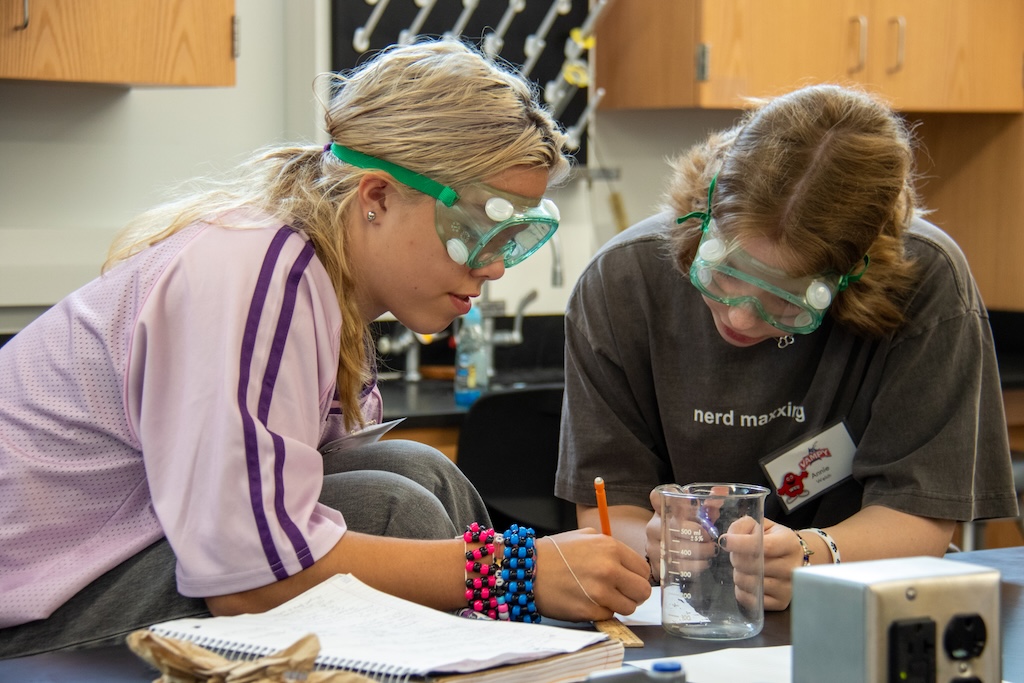
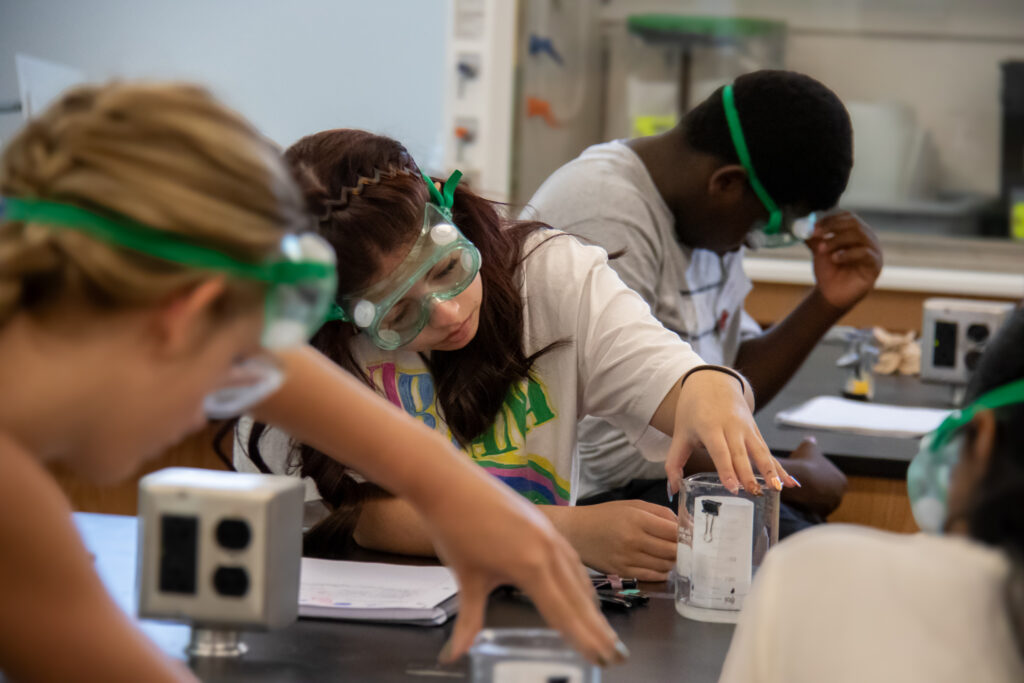
In these past weeks in Chemistry, students have wrestled with what used to be the most gripping questions of life: What is the smallest unit that we know? What holds all substances together? How are new compounds formed from seemingly nothing? All of these questions have been answered through the constant back and forth between the classroom and the lab in these past weeks.
The students started off their chemistry journey by learning properties of the elements, molecules, and compounds that make up our everyday life. They dove into the differences of periodic trends between elements on the periodic table and how that affects bonding in compounds. Similarly, they have burned metallic salts to showcase the emission spectrum of visible light and how readily an electron accepts energy.
As the class continued, they have continued to build on the components previously to understand the next topic. The class goes deeper into the states of matter each compound naturally exists in, and how readily it evaporates or melts. The students have demonstrated the properties of molecules through different techniques such as chromatography and boiling.
This past week, the chemistry students were afforded the chance to tour the U.S. Space and Rocket Center in Huntsville, Alabama. There students heard from both current and former NASA employees about the milestones championed by the space industry, as well as all of the intricacies and nuances necessary to explore the cosmos, as well as attended a planetarium show and given time to explore the multiple exhibits. The Space and Rocket Center also showcased the importance of both team chemistry and astrochemistry for a mission’s success.
As we progress in our learning, we will go into even more detail about the composition of different compounds such as acids and gases, furthering the knowledge of how all parts of the chemical life works together.
We are excited to continue exploring and explaining the interactions in the chemistry necessary for life to proceed on earth!